There’s a reason milanesa is basically Argentina’s national comfort food. Take a thin cutlet of beef — or chicken, pork, veal — pound it flat, bread it with seasoned crumbs, and fry it golden. What you get is a shattering, crunchy crust around tender, juicy meat. Simple? Yes. Easy to mess up? Also yes.
If you’re searching for the best milanesa argentina near me, the finder below pulls up Argentine steakhouses, Latin restaurants, and empanada-and-milanesa shops near your location. After that, this guide covers everything: what separates a great milanesa from a mediocre one, the different types (including the famous Napolitana), how it compares to a Wiener schnitzel, a proper recipe, and the mistakes that ruin it.
📍 Find Milanesa Argentina Near You
Share your location and we’ll open the best-bet spots near you on Google Maps — Argentine steakhouses, Latin American restaurants, and empanada shops.
Your browser asks permission first, and nothing is stored — it just opens Google Maps centered near you. No precise location? The buttons still run a “near me” search.
Quick Answer
Milanesa argentina is a breaded, fried (or baked) meat cutlet — thin beef, chicken, or veal coated in seasoned breadcrumbs and cooked until crisp and golden. It’s Argentina’s most beloved everyday comfort food. Find it at Argentine steakhouses, empanada shops, and Latin American restaurants. The famous Milanesa Napolitana adds tomato sauce, ham, and melted cheese on top.
📋 Table of Contents
- Best Milanesa Argentina Near Me
- What Is Milanesa Argentina?
- Quick Facts
- Why It’s So Popular
- History & Italian Roots
- Types of Milanesa
- What It Tastes Like
- Essential Ingredients
- Milanesa vs Schnitzel vs Chicken-Fried Steak
- Best Side Dishes
- Nutrition & Health
- How to Find the Best
- Homemade Recipe
- Common Mistakes
- FAQs
- Final Thoughts
Best Milanesa Argentina Near Me
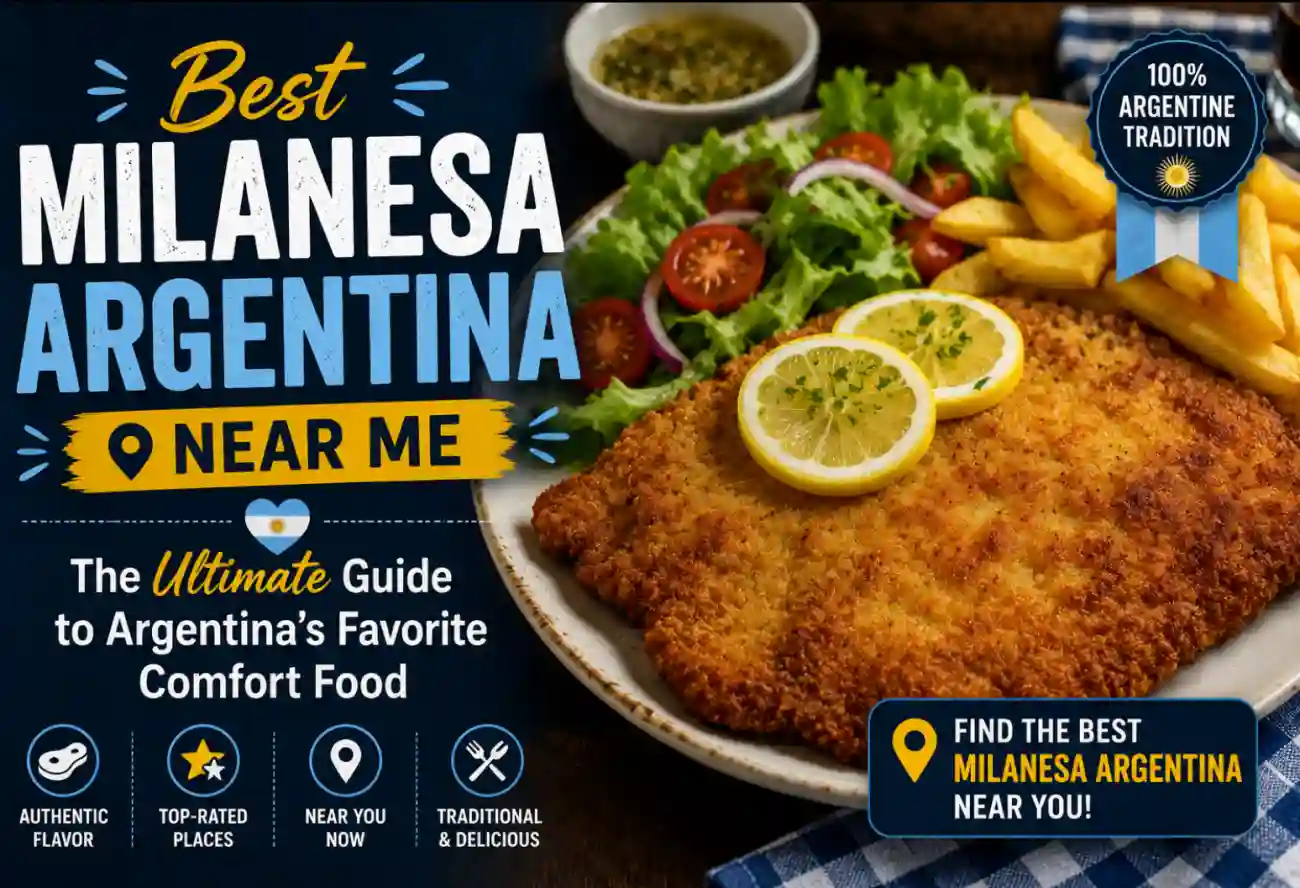
Start with the finder up top. It runs three Google Maps searches around your location: “milanesa argentina,” “Argentine steakhouse,” and “Latin American restaurant.” One of those three almost always turns up a good plate.
Why three? Because not every restaurant lists it by its Spanish name. A steakhouse might call it a “breaded cutlet” or “Argentine schnitzel.” An empanada shop might just have “milanesa” on the board without the “argentina.” Searching a few ways catches places that make it but label it differently.
What Is Milanesa Argentina?
Milanesa argentina is a thin slice of meat — usually beef, sometimes chicken, pork, or veal — pounded flat, dipped in beaten egg, coated in seasoned breadcrumbs, and fried (or baked) until golden and crunchy. If that sounds like a schnitzel, you’re not wrong. The technique came from Italy, but Argentina made it its own.
What sets the Argentine version apart is the seasoning. The meat is typically marinated with garlic, parsley, and sometimes a splash of milk before breading. That extra step gives the cutlet an aromatic, savory depth you don’t get from plain bread-and-fry methods.
It’s the kind of dish that’s everywhere in Argentina — homes, corner cafés, high-end parrillas, school lunchboxes. If you’ve never tried it, think of the crispiest, most flavorful breaded cutlet you’ve ever had, and you’re in the neighborhood.
Quick Facts About Milanesa Argentina
| Feature | Details |
|---|---|
| Dish type | Breaded & fried (or baked) meat cutlet |
| Main proteins | Beef, chicken, pork, veal |
| Cuisine | Argentine (Italian origins) |
| Key seasoning | Garlic, parsley, salt, pepper |
| Texture | Crispy crust, tender interior |
| Served | Hot, with sides or in a sandwich |
| Famous variation | Milanesa Napolitana |
Why Milanesa Argentina Is So Popular
Three reasons, all practical. First: it’s incredibly versatile. Serve it on a plate with fries, stuff it in a crusty bread roll as a sándwich de milanesa, or crown it with sauce and cheese as a Napolitana. Same base, completely different meals.
Second: it’s affordable. A thin cut of beef goes a long way once you pound it flat and bread it. It stretches the budget without feeling like a budget meal, which is why Argentine families have relied on it for generations.
Third — and this one’s hard to overstate — it’s deeply satisfying. That crunch when you bite through the crust, followed by hot, juicy meat? There’s a reason kids, teenagers, and adults all pick it. It hits a comfort-food nerve that cuts across ages and tastes.
The History of Milanesa in Argentina
The dish traces straight back to Italian immigration. Cotoletta alla milanese — the breaded veal cutlet from Milan — arrived in Argentina with the massive waves of Italian immigrants in the late 19th and early 20th centuries. It landed in a country that already had excellent beef and a culture built around it.
What happened next was predictable and delicious: Argentine cooks swapped veal for local beef, added their own garlic-and-parsley signature, and made it a kitchen staple. Over the decades it evolved from an immigrant comfort food into a national icon.
Today it’s so embedded in Argentine daily life that debates about the “right” way to make one are genuinely heated. Beef or chicken? Thick crumbs or fine? Fried or baked? There’s no official answer, just strong opinions — which is usually a sign of a dish that matters to people.
Different Types of Milanesa
The base technique stays the same, but the variations change the entire personality of the dish:
| Type | What’s Different |
|---|---|
| Milanesa de carne (beef) | The classic — thin beef, crispy crumb, rich flavor |
| Milanesa de pollo (chicken) | Lighter, leaner, slightly milder |
| Milanesa Napolitana | Topped with tomato sauce, ham, melted cheese — a full meal |
| Milanesa a caballo | Topped with two fried eggs (“on horseback”) |
| Sándwich de milanesa | Cutlet in crusty bread with lettuce, tomato, mayo |
| Milanesa al horno (baked) | Less oil, lighter, crispness from the oven |
Milanesa Napolitana deserves special mention because it confuses people. Despite the name, it has nothing to do with Naples — it was invented in Buenos Aires, reportedly at a restaurant called Nápoli. It takes a fried milanesa, tops it with tomato sauce, a layer of ham, and a blanket of melted mozzarella. Rich? Very. Worth trying at least once? Absolutely.
What Does Milanesa Argentina Taste Like?
Bite through the crust and here’s what you get: a loud crunch first, then a rush of savory, slightly garlicky meat that’s tender and juicy underneath. The breadcrumbs add a toasty, golden flavor that’s more than just texture — they carry seasoning and a hint of richness from the egg wash.
Depending on the meat, expect these notes:
- Beef milanesa — richest flavor, meaty and savory with more depth.
- Chicken milanesa — lighter, milder, a little sweeter.
- Napolitana — tangy tomato, salty ham, gooey melted cheese over crispy meat.
A great milanesa shouldn’t taste greasy. If it does, the oil wasn’t hot enough when it went in — one of the most common fails. Done right, it’s crisp, dry on the surface, and juicy inside.
Essential Ingredients
The list is short. What matters is how each component is handled:
| Ingredient | What It Does |
|---|---|
| Beef (or chicken/veal) | The main event — flavor and protein |
| Eggs | Bind the breadcrumbs to the meat |
| Breadcrumbs | The crispy golden crust |
| Garlic | Aromatic, savory punch |
| Parsley | Freshness and herby lift |
| Salt & pepper | Balance and seasoning |
| Oil (for frying) | Must be hot enough for a clean crisp |
One thing to know: Argentine breadcrumbs are typically fine-ground, not the coarse panko style. That gives the crust a tighter, crispier shell rather than the shaggy, flaky texture you’d get from Japanese breadcrumbs. Both work, but fine crumbs are the authentic move.
Milanesa vs Schnitzel vs Chicken-Fried Steak
Breaded cutlets exist in dozens of cuisines, and people mix them up. Here’s how they actually differ:
| Dish | Origin | Meat | Key Difference |
|---|---|---|---|
| Milanesa Argentina | Argentina | Beef, chicken, veal | Garlic & parsley in egg wash; fine crumbs |
| Wiener Schnitzel | Austria | Traditionally veal | Unseasoned crumbs; fried in butter; served with lemon |
| Cotoletta alla Milanese | Milan, Italy | Veal, bone-in | Bone left in; fried in butter; thicker cut |
| Chicken-fried steak | Southern U.S. | Beef round | Flour + egg coating; smothered in cream gravy |
So if your map search for “milanesa” comes up empty, try “schnitzel” or “breaded cutlet” — many kitchens serve something very close under those names. The difference is mostly in the seasoning and what comes on the side.
Best Side Dishes for Milanesa
In Argentina, the classic pairings are well-established, and they exist for a reason — they balance the richness of the fried crust:
- French fries — the most popular partner. Crispy next to crispy. Argentines call the combo milanesa con papas fritas and it’s practically a national institution.
- Mashed potatoes — soft and creamy against the crunch, especially good with Napolitana.
- Mixed salad — lettuce, tomato, and onion with olive oil cuts the richness cleanly.
- Purée (squash or pumpkin) — a common Argentine side that adds sweetness.
- Lemon wedge — a squeeze of lemon over a hot milanesa lifts the whole thing. Don’t skip it.
For a sandwich, the default is a crusty bread roll with lettuce, tomato, and a smear of mayo. Some shops add a fried egg on top. It’s messy, it’s perfect, and it’s cheap — which is why sándwich de milanesa stalls are everywhere in Buenos Aires.
Nutrition and Health
Let’s be honest: this is fried comfort food, not a health food. But it’s not as bad as you might assume, either.
The meat itself is lean protein — beef or chicken. The calories come from the oil and the breading. A single cutlet with a side salad is a reasonable meal; stack fries and a Napolitana on top and the numbers climb.
🥗 The honest take
- Protein-rich — beef and chicken are strong sources of protein and iron.
- Baked versions cut the oil — less fat, similar crunch if done well.
- Portion matters — one cutlet plus salad is balanced; two cutlets plus fries is heavy.
- The seasoning is a plus — garlic and parsley add flavor without adding calories.
If you’re watching your intake, order it baked (al horno) and with salad instead of fries. You still get the crunch and flavor — just without the deep-fry soak.
How to Find the Best Milanesa Argentina Near Me
Use the finder at the top, then vet before you commit. A few things to look for in reviews:
- “Crispy” or “crunchy” — the crust is everything.
- “Juicy” or “tender inside” — means they didn’t overcook the meat.
- “Big portion” or “hangs off the plate” — classic Argentine sizing.
- “Homemade” or “fresh breadcrumbs” — not pre-frozen cutlets.
- “Authentic” or “just like in Buenos Aires” — people who’ve been there notice the difference.
Your best bets, in order: Argentine parrilla (steakhouse) restaurants, empanada shops that also serve milanesas, and broader Latin American or South American restaurants. Avoid places where milanesa is buried at the bottom of a generic “international” menu — it’s usually an afterthought.
✅ Signs of a great milanesa
- Golden, even crust — no pale or burnt patches.
- Audible crunch when you cut it.
- Meat is thin and tender, not thick and chewy.
- Not greasy — the cutlet sits dry on the plate, not in a pool of oil.
- Garlic-parsley aroma hits you before the first bite.
Homemade Milanesa Argentina Recipe
This is a straightforward recipe for classic beef milanesa. The technique is what matters — get the oil temperature right and you’re 90% of the way there.
Ingredients
- 4 thin beef cutlets (top round or eye of round), pounded to about 5mm / ¼ inch
- 2 eggs
- 2 cloves garlic, minced
- 2 tablespoons fresh parsley, finely chopped
- 1½ cups fine breadcrumbs
- Salt and black pepper
- Oil for frying (sunflower or vegetable — enough for about 1cm depth)
Instructions
- Pound the beef between plastic wrap until it’s evenly thin. Uneven thickness means uneven cooking — thin spots burn while thick spots stay raw.
- Make the egg wash — beat the eggs with the garlic, parsley, a pinch of salt, and pepper. This is where the flavor goes.
- Dip each cutlet in the egg mixture, let the excess drip off, then press into the breadcrumbs. Cover both sides evenly and press firmly so the crumbs stick.
- Rest the breaded cutlets on a rack for 10 minutes. This dries the surface slightly and helps the coating hold during frying.
- Heat the oil to about 180°C / 350°F. Test with a breadcrumb — it should sizzle immediately. If the oil smokes, it’s too hot. If the crumb sinks and sits, it’s too cold.
- Fry each cutlet for about 2–3 minutes per side, until deep golden. Don’t crowd the pan — two at a time, max.
- Drain on a rack (not paper towels — a rack keeps the bottom from steaming and going soft).
- Serve immediately with a lemon wedge and your choice of sides.
For Milanesa Napolitana: after frying, place the cutlet on a baking tray, spoon tomato sauce over it, lay a slice of ham, and pile on shredded mozzarella. Broil for 3–4 minutes until the cheese is bubbling and browned.
Common Mistakes That Ruin Milanesa
When a milanesa disappoints — at home or at a restaurant — it’s almost always one of these:
⚠️ What goes wrong
- Oil not hot enough — the cutlet absorbs oil instead of sealing, and you get a greasy, soggy mess. This is the #1 fail.
- Meat too thick — thick cutlets don’t cook through before the crust burns. Pound it thin.
- Skipping the rest after breading — the coating slides off in the pan because it never bonded properly.
- Crowding the pan — drops the oil temperature and steams the cutlets instead of frying them.
- Draining on paper towels — traps steam underneath and softens the crust. Use a wire rack.
- No seasoning in the egg wash — plain egg and plain crumbs taste flat. The garlic and parsley are not optional.
Fix those six things and your milanesa goes from okay to genuinely great. The biggest one is the oil temperature — get that right and the rest follows.
Frequently Asked Questions
What is milanesa argentina?
Where can I find the best milanesa argentina near me?
What is Milanesa Napolitana?
What meat is best for milanesa?
Is milanesa argentina fried or baked?
What’s the difference between milanesa and schnitzel?
What sides go with milanesa?
Final Thoughts
Milanesa argentina is comfort food at its most honest — a thin, crispy, golden cutlet that’s fast to make, cheap to eat, and deeply satisfying. The great ones nail the details: seasoned egg wash, fine crumbs, properly hot oil, and a cutlet thin enough to cook through before the crust burns.
Run the finder above to spot the Argentine steakhouses and Latin restaurants near you, try the Napolitana at least once, and don’t forget the lemon squeeze. A well-made milanesa doesn’t need anything complicated — it just needs someone who cares enough to get the simple things right.
⭐ Key Takeaways
- Milanesa argentina is a breaded, fried meat cutlet — beef, chicken, or veal with a garlic-parsley seasoned crust.
- Best found at Argentine steakhouses, empanada shops, and Latin American restaurants.
- The famous Milanesa Napolitana adds tomato sauce, ham, and melted cheese on top.
- The #1 mistake is oil that isn’t hot enough — it makes the cutlet greasy instead of crispy.
- If the name returns nothing on maps, also search “schnitzel” or “breaded cutlet.”
- Serve with fries, salad, or in a sandwich — and always a squeeze of lemon.
🔗 References & Sources
- Argentine culinary history and immigration references — background on the dish’s Italian roots
- General nutrition data for beef, chicken, and fried foods — approximate values
- Local restaurant menus & reviews (Google Maps, Yelp) — availability and quality signals
Last reviewed: June 2026. Nutrition and pricing are general estimates and vary by location and restaurant. Confirm ingredients with the kitchen if you have allergies or dietary needs.